About RCC Hume
RCC Hume/Spun pipes arereinforced concrete pipes commonly used for drainage, sewerage, culverts, and irrigation.These pipes are known for their durability, leak-proof nature, and resistance to corrosion and chemicals, making them a reliable choice for fluid and wastewater conveyance.They are manufactured using cement, steel reinforcement, and aggregates, and are typically produced using the centrifugal casting or spun process.
-
Reinforced Concrete:
The combination of concrete and steel reinforcement provides high strength and durability.
-
Durability:
RCC Hume pipes are known for their long service life and resistance to wear and tear, making them suitable for underground installations.
-
Leak-proof:
The manufacturing process and tight joints minimize the risk of leakage.
-
Corrosion Resistance:
They are resistant to corrosion from water and sewage, ensuring a long lifespan.
-
Smooth Interior:
The smooth interior surface allows for efficient fluid flow and reduces the risk of clogging.
-
Various Sizes and Classes:
Available in a range of sizes and classes (e.g., NP1, NP2, NP3, P1, P2, P3) to suit different applications.
- Drainage:Used for storm water and surface water drainage.
- Sewerage:Suitable for carrying wastewater in sewage systems.
- Culverts:Used to carry water under roads and other infrastructure.
- Irrigation:Used for distributing water in agricultural and irrigation projects.
- Water Supply:Used for conveying both raw and treated water in water distribution networks.
- Cable Management:Increasingly used in telecom industries for laying underground cables.
- Centrifugal Casting/Spun Process:RCC Hume pipes are manufactured using the centrifugal casting or spun process, where concrete is poured into a rotating mold.
- Reinforcement Cage:A steel reinforcement cage is placed inside the mold to provide tensile strength.
- Curing:The concrete is cured to achieve the desired strength and durability.
In Kolkata, West Bengal
Sewer and drainage systems
Stormwater management
Culverts
Underground utility conduits
Key Features
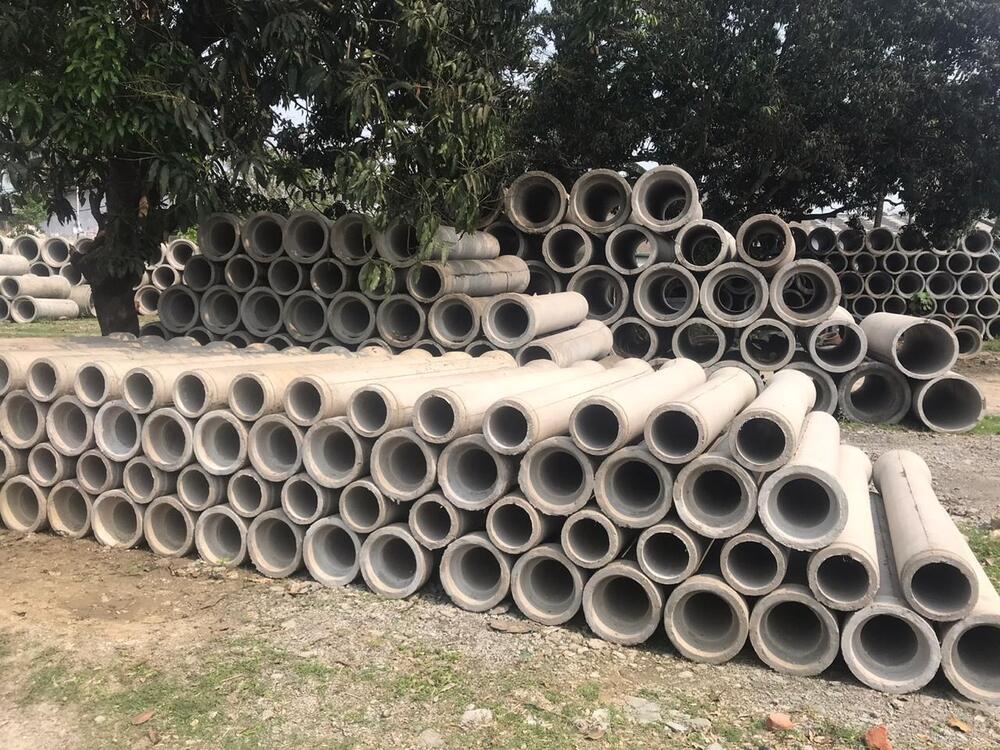
Material Reinforced concrete
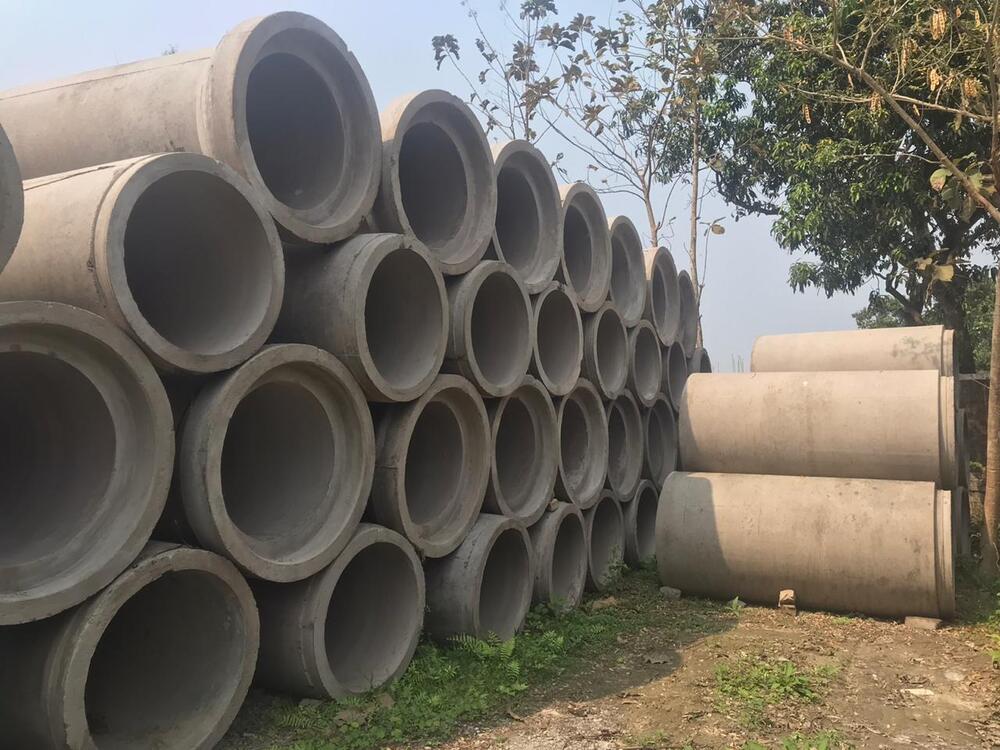
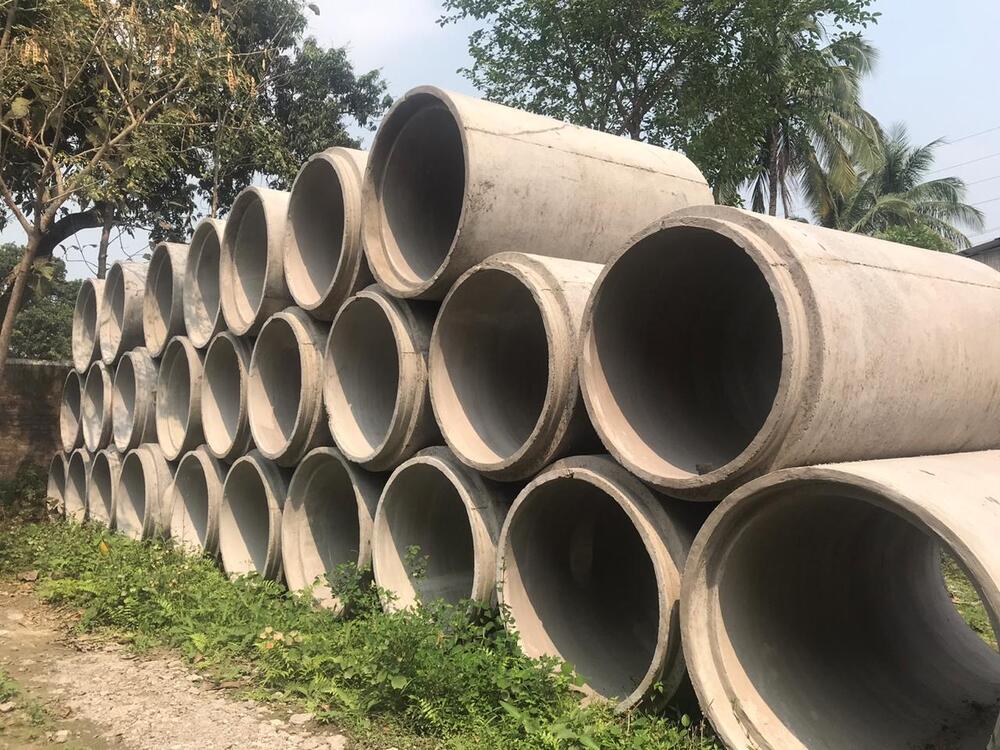
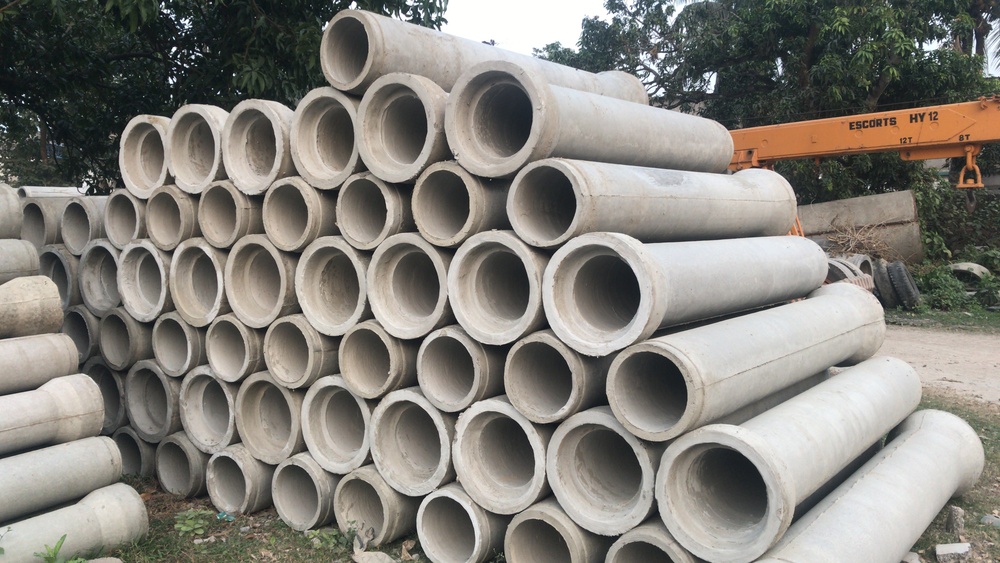
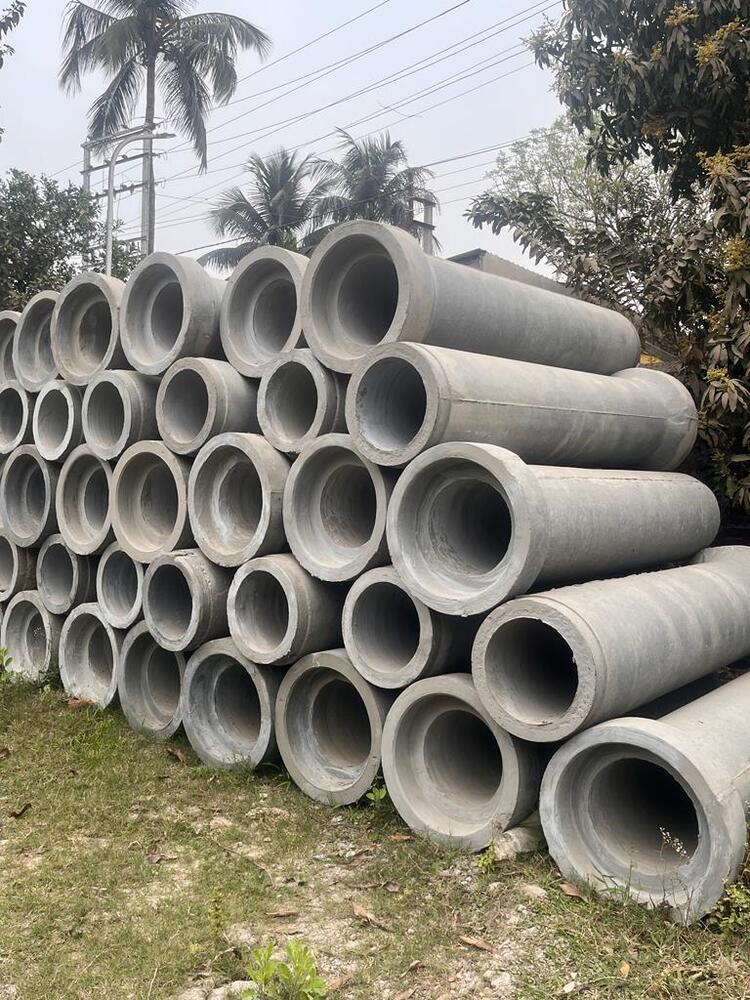
Shape Cylindrical with bell and spigot ends for joint fitting
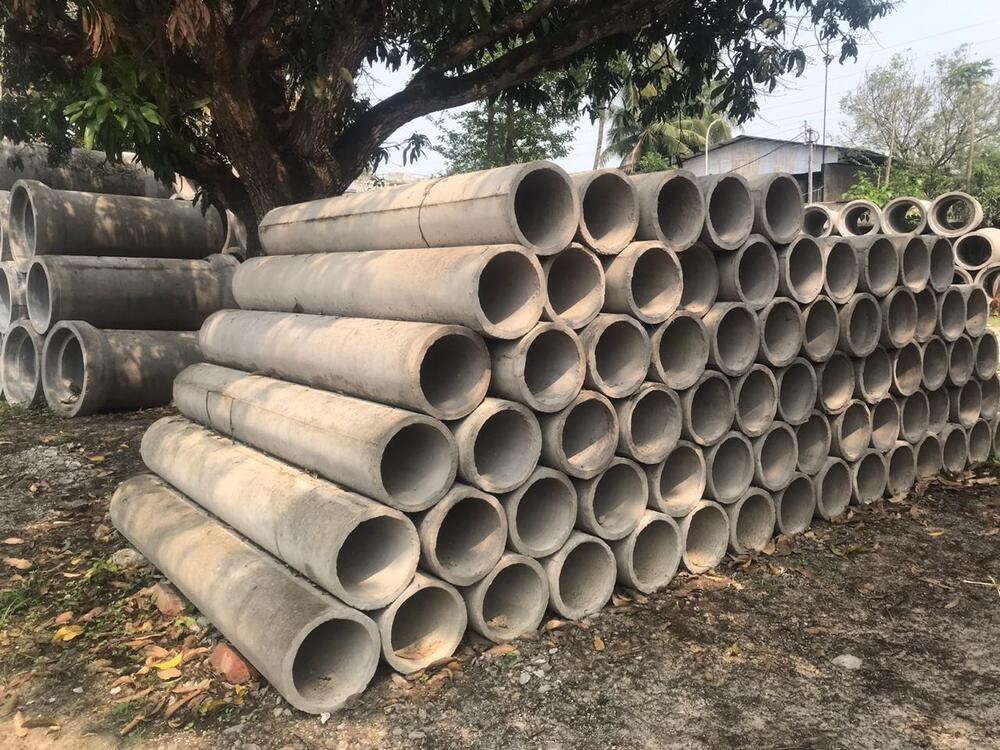
Orientation Pipes are stacked horizontally in multiple rows
Setting Outdoor storage area, likely at a construction site or precast concrete manufacturing facility
Surroundings Some greenery and trees are visible in the background indicating the site is in an open, possibly semi rural area
These pipes are designed to be strong durable and capable of withstanding heavy loads and harsh environmental conditions
Versatile ApplicationsRCC Hume/Spun Pipes are engineered for diverse uses, including water supply, drainage, sewerage, culverts, and irrigation. Their robust design and excellent tensile strength enable them to withstand constant water flow and demanding environmental conditions, making them essential for infrastructure projects.
Precision & Quality AssuranceManufactured via the centrifugal spinning process, these pipes meet IS 458:2003 specifications for dimensional accuracy (2 mm) and durability. Every pipe is rigorously tested by hydrostatic pressure to ensure leak-tight performance. The incorporation of quality steel reinforcement elevates both structural integrity and service life.
Customizable to Project NeedsAvailable in a range of diameters (150 mm 1800 mm), thicknesses (typically 50 mm150 mm), and lengths, RCC Hume/Spun Pipes can be tailored to meet specific project requirements. This flexibility allows for efficient adaptation, ensuring a perfect fit for any construction, irrigation, or drainage endeavor.
FAQs of RCC Hume/Spun Pipe:
Q: How are RCC Hume/Spun Pipes installed in different applications?
A: RCC Hume/Spun Pipes can be installed either in trenches underground or laid above ground, depending on the application. Proper jointing methods such as collar joints and sealing with rubber rings or cement mortar ensure leak-proof connections and durable performance in water supply, drainage, or sewerage systems.
Q: What is the typical manufacturing process for RCC Hume/Spun Pipes?
A: These pipes are manufactured using the centrifugal spinning process, which produces a dense, uniform concrete wall reinforced with steel wire or scrap. This method ensures that pipes attain the desired smooth finish, structural integrity, and strength as per IS 458:2003 standards.
Q: When should I choose RCC Hume/Spun Pipes over other piping options?
A: RCC Hume/Spun Pipes are ideal when high strength, durability, and long service life are key requirementssuch as for drainage, sewerage, irrigation, and culverts. Their resistance to hydrostatic pressure and structural rigidity make them preferable for large-scale infrastructure and public works.
Q: Where can RCC Hume/Spun Pipes be effectively used?
A: These pipes are widely used in infrastructure projects involving water supply networks, wastewater management, drainage, and agricultural irrigation. Their customizable sizes make them suitable for urban, rural, industrial, and municipal applications across varied geographical conditions in India.
Q: What quality tests do RCC Hume/Spun Pipes undergo before being supplied?
A: Each pipe is subjected to a hydrostatic pressure test as per IS 458 guidelines to check for leakage and confirm structural soundness. This ensures reliability and high performance under rated pressures from 0.2 MPa to 0.6 MPa in real-world usage.
Q: What are the main benefits of using RCC Hume/Spun Pipes in construction?
A: These pipes offer excellent compressive strength ( 30 MPa), rigidity, long lifespan (over 25 years), and low maintenance requirements. They are built to withstand challenging environments, pressure, and heavy loads, making them a cost-effective solution for enduring infrastructure.




 Send Inquiry


 Send Inquiry
 Send Inquiry
 Send SMS
 Call Me Free